
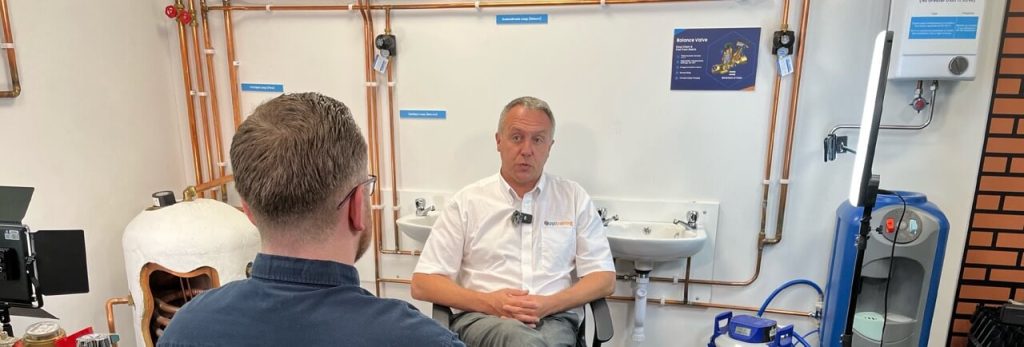
#004 - Interview: Richard Johnson.
This month’s blog is a celebratory one, as we welcome Richard Johnson back to the PPL companies.
Richard was kind enough to sit with our Marketing Manager, Dave Lewis to discuss his move back to PPL Training and joining the PPL Engineering Services team in a consultancy role.
Getting to Know Richard Johnson
DL: Welcome back to the PPL team, Richard. Can you tell our audience a little bit about yourself and your experience so far as a Water Hygiene Consultant?
RJ: Initially I did a chemical engineering degree, way back probably 20 years ago now. Then went straight into education as a school teacher – teaching chemistry for about three years. I carried on teaching in different schools, and then I got a job as a plumbing/heating engineer.
I then got a job with a water treatment company. Over the next five years, I worked primarily in the NHS before joining PPL training probably about eight years ago.
I was delivering training in water hygiene for almost five years before going out on my own, and doing some subcontracting, including work for PPL training.
I had been doing more of the plumbing work, so to speak, and the maintenance of water systems, and the application of water hygiene generally, across different properties, be it healthcare or residential housing accommodation.
Water, Water Hygiene and Water Systems
DL: Fantastic. So the buzzwords there being water and water hygiene and water systems, that's a big thing for you. In simple terms, can you talk about why water hygiene is so important to facilities managers, engineering and compliance leadership?
RJ: Well, most people would think that gas safety in properties is important, electrical as well, but a lot of people unfortunately think the water services to their premises are benign, that there are no relevant or significant health risks associated with it, and they couldn't be, further from the truth.
As we've seen in Devon recently in May, bacteria or microorganisms in this particular, incident, Cryptosporidium was found in local water and that caused a serious health risk to those people. In the area, people were coming down with what's known as Cryptosporidiosis, which causes a severe form of gastroenteritis.
Cryptosporidiosis is a disease that can affect both people and farm animals. It can be caused by a parasite called cryptosporidium, which is commonly found in lakes, rivers, and untreated drinking water, and sometimes swimming pools. Anyone can get cryptosporidiosis, but it is most commonly seen in children between the ages of 1 and 5. As well as in people receiving care, individuals with underlying illnesses, and those with weak immune systems. If water systems are not properly managed, outbreaks of cryptosporidiosis can occur, leading to significant public health concerns. However, these concerns are not talked about enough, Richard explains why this is the case.
So, news around these issues with water, obviously brings water to the forefront of people’s minds, but very quickly, these reports in the news, they come and they go and people forget unfortunately.
But for people that own buildings, especially large buildings it’s a day-to-day concern. There are day-to-day issues that they need to cope with. Hence the fact that people can be harmed by the water systems, because of the lack of management of those systems.
It is of great importance to senior management and within the NHS itself, the Trusts.
The Trust has to ensure that the facilities managers, and other senior personnel within the trust, are dealing with the respective problems that water can cause as they can cause harm to people using those facilities.
The Impact of Mismanaging Your Water Systems
DL: Obviously people are of the utmost importance in these situations, but from your experience in industry, can you speak about the impact that mismanagement and neglecting of those water systems have to the NHS Trusts, building owners and the landlords of the world?
RJ: So, over the last, I suppose, 10 years, there have been a number of cases reported in the media unfortunately of people contracting Legionnaires’ Disease specifically relating to the growth of legionella bacteria in water systems.
So there’s people’s exposure to that bacteria – but that’s not the only bacteria that can cause significant harm to individuals and the NHS Trusts know of the many significant pathogens that will be found in both water systems and on surfaces within buildings, and the fact that the control of those pathogens is paramount to prevent hospital acquired infections.
For landlords, employers, and the Trusts, there’s also the need to comply with the Health and Safety at Work Act and in healthcare establishments, the Health and Social Care Act.
So, you have the HSE that can obviously make prosecutions come to fruition in the courts. You’ve also got the, CQC, the Care Quality Commission that may seek to, prosecute if they find, that not sufficient work is being done or carried out to prevent, infections being transmitted. That can be either from services or people to people, or from the hot and cold water systems, within buildings.
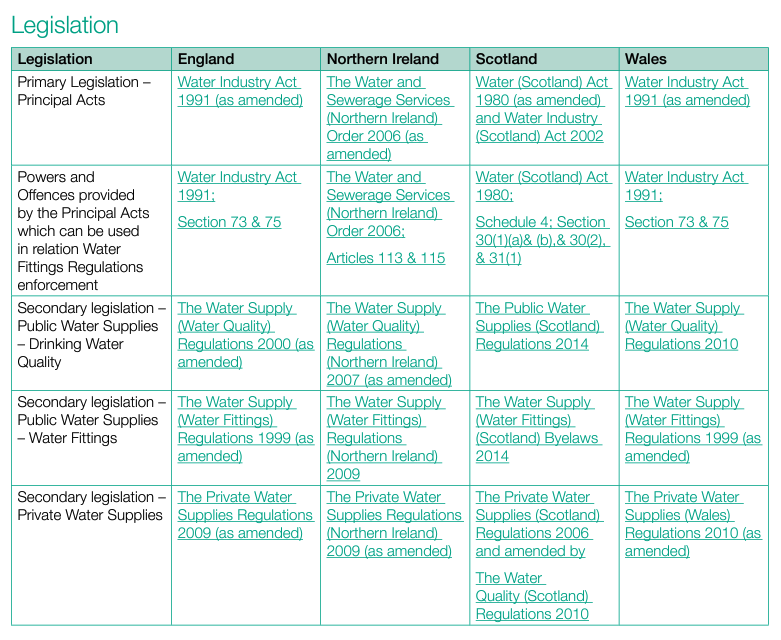
DL: Ok, so some pretty serious consequences for mismanagement then… Can you talk about these systems and the guidance available for individuals tasked with working on them?
RJ:There are many other systems within hospitals that could potentially cause transmission of disease. So, the fact that now we have Water Safety Groups, which call upon a large number of departments to meet together regularly to discuss their own individual issues, relating to the potential spread of bacteria, specifically focused around water, is an improvement that’s been made since the publication of HTM 04-01 in 2016.
How Has Richard Helped Organisations to Manage Their Water Systems In The Past?
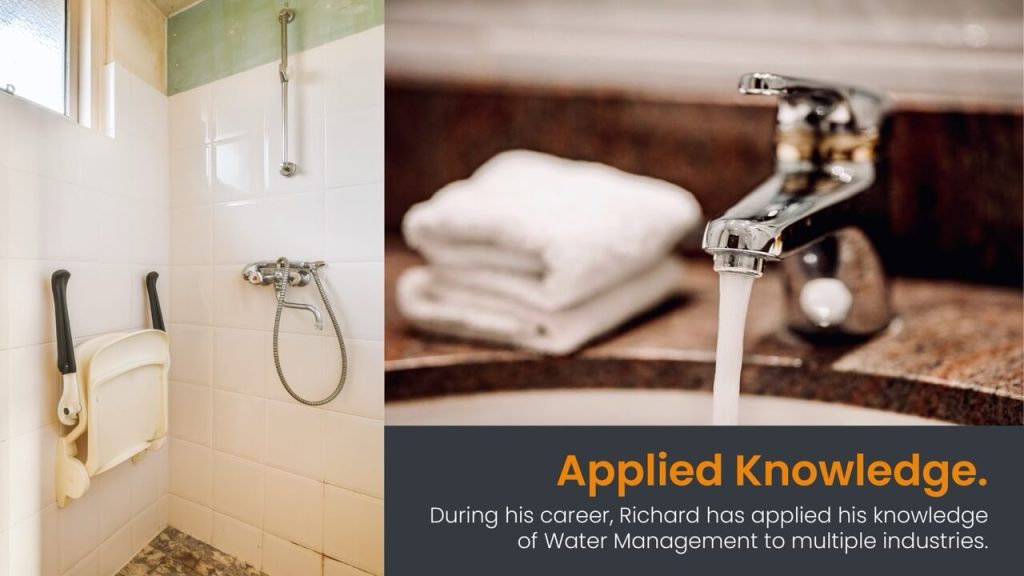
DL: We’ll circle back to Water Safety Groups later on, but I wanted to ask you now about your time away from PPL Training and when you were subcontracting – were there any particular projects or contracts that you worked on that you want to share with us today?
RJ: So I got a job with effectively a boiler fit out company, but they’d been given the standard level agreement for the local council which included schools and NHS surgeries.
One particular surgery had an issue with high legionella counts. The NHS were aware, and as a result, I went into that building and carried out a full risk assessment.
Initially the NHS had already, fitted the point of use filters to all the outlets to prevent any harm to the staff within the building. It was a matter for me to feedback to the Water Safety Group, within the NHS.
So, on the Water Safety Group there were three or four people that I was dealing directly with. We have Facilities Manager, and other managers relating to that particular property.
Also, an Authorising Engineer, working with the Trust.
It was my role to explain what the issues I found, through carrying out the risk assessment, and then to communicate what plan was going to be carried out, in terms of trying to remedy the issues of high legionella counts.
This took a significant amount of time, simply because of the dead legs and blind ends, blind loops found within the premises, but eventually, we were able to get the numbers of Legionella bacteria found through water analysis, down to an acceptable level, and then non detectable in the end, so the NHS, and the council were then in agreement, to take the point of use filters off, with the ongoing water management regime being implemented, as suggested by my risk assessment.
Water Safety Group (WSG): A multidisciplinary group formed to undertake the commissioning and development and ongoing management of the water safety plan (WSP). It also advises on the remedial action required when water systems or outlets are found to be contaminated and the risk to susceptible patients is increased.
Definition of a Water Safety Group found within HTM 04-01 - NHS England
DL: So it sounds like the work that you’ve done there has kind of, greased the wheels, as it were, of communication between the NHS and that local government. Obviously the outcome of that project was really positive. So are there any learnings that you are looking to apply to your new role as an Authorised Engineer?
RJ: Well, there was a little bit of misunderstanding, with the water system. The legionella bacteria were found within the hot water circulatory system, and the cold water down service.
Unfortunately, as a result all water, particularly drinking water, was not being used over the duration of the time that the point of use filters were on and that being part of the mains water system, it did turn out that, there was then a problem with the mains cold water, feeding the, the water dispensers, and that effectively was found, to be within the dispenser itself rather than the mains, but that was further testing that had to be carried out, and disinfection again to resolve that problem.
So clearly having a greater understanding of what water systems are being effected and what advice you give initially to the occupants of these buildings, the staff working for the NHS, kind of is paramount. Otherwise potentially you could end up with other problems related to water hygiene.
DL: Okay. So we’ve spoken a lot there about, the NHS and obviously your dealings there with government, you mentioned schools. I want to switch gears a little bit and just discuss any other areas that you’ve found success in your career.
RJ: There was an instance of a hotel that was going to be closed down by the local council.
This was due to the fact that the hotel management hadn’t responded to their water hygiene company. The water hygiene company had taken a number of water samples and tested those samples for Legionella bacteria and they again got elevated levels. But the issue was that the hotel managers didn’t get back to the company and as a result of them following their own policies, relating to customers that don’t respond to significant health risks, they ceased working for the hotel, and also, reported them to the local authority.
The local authority came in, and took their own samples, and found significantly higher levels of Legionella bacteria, than what the first company had found, and as a result of that, I had to have meetings with the council, relating to what was going to happen, moving forward, as they were intending on the day of the meeting to close the hotel down.
Luckily through communication, discussions with the council, and being able to show that recent training had been carried out of all members of staff, that they have an effective management regime in place, in terms of the control of the water system, and the potential risk to hotel guests, that they did, allow the hotel to continue servicing the local population.
Over the course of a number of months we were able to again get control of the legionella bacteria, so that we could report back to the local council that there was a very low risk of Legionnaires’ disease or any cases of Legionnaires’ disease being caused by the system.
DL: That must be very rewarding for you then as far as being able to see the impact of the work that you’re doing for those businesses…
Well, it’s all about public health. They’re the most important people. They’re the people using, you know, not just the staff, but obviously visitors to buildings… They should feel safe in using those outlets without any potential harm coming to them as a result of that.
It’s through education of the individuals within particular that hotel, the training of them, that we were able to establish a base level of understanding, and then moving forward, I would be able then to pull back from overall control over the water system. So you know, it benefits everybody, not just obviously, the management, but obviously everyone involved with the hotel in terms of jobs, effectively they were all going to be made unemployed.
As well as the benefits to the local community, it’s the economics of the local area.
DL: Not all heroes wear capes – some of them inspect water systems!
The Future Challenges of Water Safety Groups
DL: As I said, I would circle back to Water Management Group and the Water Safety Group. With your recent experiences, working with NHS trusts and hospitals, Do you foresee any sort of major challenges for them in sort of carrying out the guidance that is issued in the HTM?
RJ: In terms of compliance with current law, and guidance, the facilities, management teams do a very good job. But often these systems are tick boxes, unfortunately, and some of the understanding just isn’t, isn’t there. So there is the need for support both for senior management and for operatives that carry out the routine tasks and maintenance of the water system.
I think costs can be cut through understanding a lot. I feel a lot of tasks are carried out unnecessarily. duplication or just, simply a misunderstanding of what’s trying to be found. The value of the information collected has to be linked with the cost of that data being collected.
If there’s no value to the information being collected, why has it all been carried out in the first place?
So in, in your role, as an AE for water, do you see yourself being able to increase people’s general understanding around that and be able to point them in the right direction of what the most valuable, what the most valuable tasks are to carry out?
Time is a valuable resource within the NHS, so if certain tasks were done, at different times and the frequency of those tasks were adjusted, I think people could make the system safer because we’d have a better understanding of the system.
A Helpful Soundbite for Your Operatives
DL: As somebody that’s worked on water systems for a long, long time, what advice would you give to people?
RJ: There is a common mantra within the industry for Legionella and for other waterborne organisms, you do need to maintain the hot water system at a higher temperature than for what the bacteria can grow. So generally speaking, you need to keep the hot water hot.
And Legionella bacteria need to have temperatures to grow above 20 degrees. But other pathogens within the water can grow at lower temperatures. But for Legionella specifically, you need to keep cold.
You always need to keep water moving, and clearly in terms of cleanliness you need to keep the water system clean.
When following the guidance, it states that you need to take hot water temperatures, cold water temperatures, and you also need to do regular flushing of infrequently used outlets. and I commonly adopt the mantra when I’m talking to operatives.
So you could say that mantra is ‘as easy as one, two, three’
Always run the hot water for one minute, and within that time you should reach 50 degrees C, or 55 in healthcare.
When you run the cold water, the temperature needs to go down. Ideally be below 20 degrees within two minutes.
Flushing, generally speaking, it should be within three minutes that you reach a temperature of stability, and with biofilm, you need to remove that, as much as you can.
So generally speaking for most medium sized buildings and other larger buildings, as easy as one, two, three is a mantra used to instil that knowledge and help people remember how to carry out that task.
[end of interview]